Pont neuf wrapped (Wrapped Pont Neuf), Paris (1975-85)

The Pont Neuf Wrapped, Paris, 1975-85
Photo: Wolfgang Volz. ©1985 Christo + Wolfgang Volz
Reichstag wrapped, Berlin (1971-95)

Photo: Wolfgang Volz. ©1995 Christo + Wolfgang Volz

The Gates , New York (1979-2005)

Photo: Wolfgang Volz
Source: https://christojeanneclaude.net/

Photo: Wolfgang Volz
Source: https://christojeanneclaude.net/
Surrounded Islands, Miami (1980-83)

Floating piers, Iseo Lake, Italy (2016)
Similar to the previous example, the ‘Floating Piers’ project encircled an island on Lake Iseo, in Italy. Originally conceived in 1970, this was the first monumental work carried out by Christo following the death of Jeanne-Claude, in 2009. The difference in this installation is that, in addition to the fabric, panels were used over which people could walk on. The installation therefore functioned as a yellow coloured pier, a 2.5-kilometre-long walkway over water.

Source: https://christojeanneclaude.net/

Source: https://christojeanneclaude.net/
Mastaba, Londres (2016-2018)

Source: https://christojeanneclaude.net/

Addendum 2026
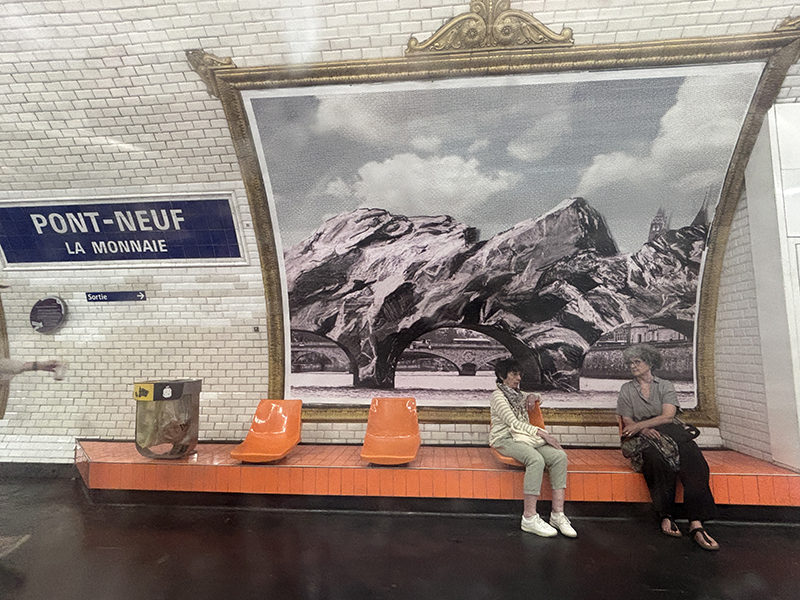
In June 2026, the Pont Neuf in Paris was once again wrapped. This time, as a tribute to the installation by Christo + JC, the French artist JR created an inflatable structure whose shape resembled the silhouette of a mountain range. Entitled “La caverne” (translation: The Cave), the structure stood 18 metres at its highest point and stretched the entire length of the bridge. Both the inner and outer walls were printed with images of caves.
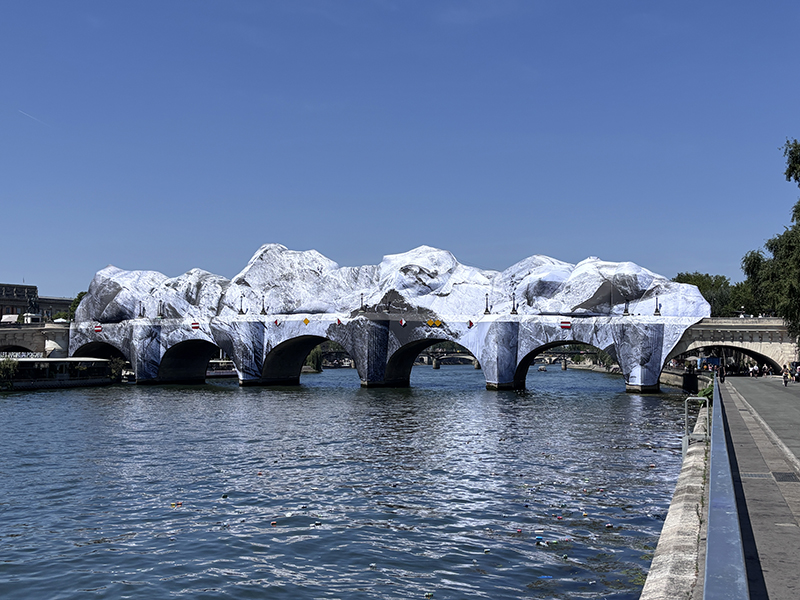
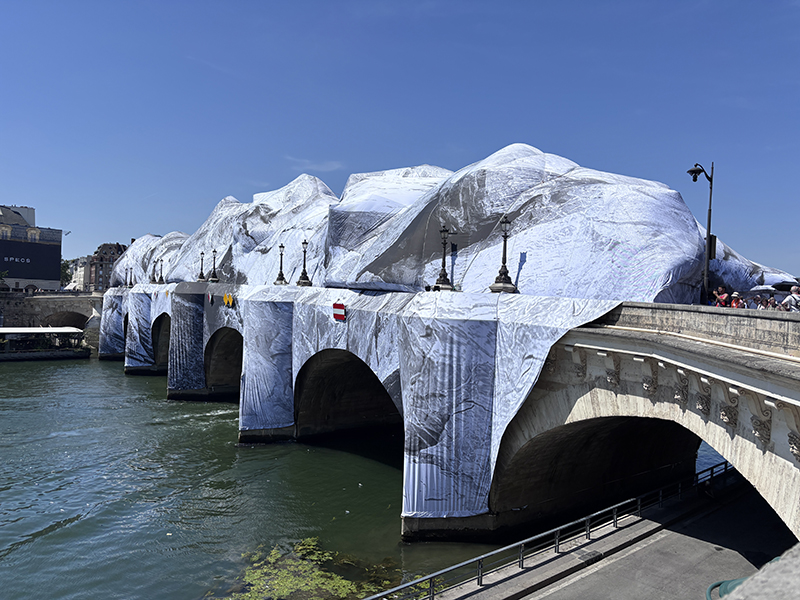
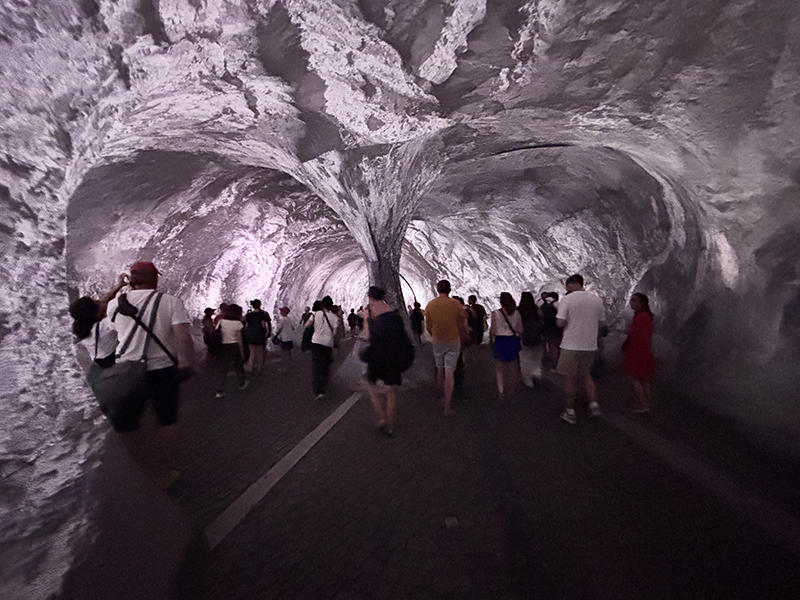
Originally scheduled for Saturday 6 June, the opening had to be postponed until the 15th due to damage caused by the weather. JR’s artwork will be open to visitors 24 hours a day until the 28th of June.
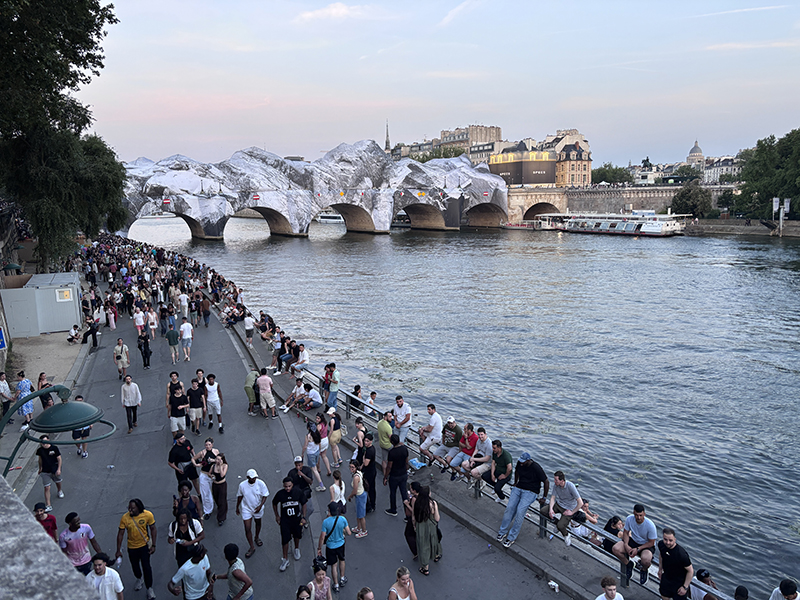
During this period, the walls of the platforms at the ‘Pont Neuf – La Monnaie’ metro station were covered with photographs of the artwork.
The historical significance of the Pont Neuf
It is worth mentioning that the Pont Neuf (translation: New Bridge) was once as iconic for the French capital as the Eiffel Tower. It was opened in 1606 and became the city’s longest (278m) and widest (28m) bridge. It was the first bridge to be built of stone (until then, all bridges had been made of wood) and the first to be built without houses. At the time, bridge construction was usually funded by the sale of houses on the bridges. The Pont Neuf, however, was funded by the Crown, using tax revenue. Instead of houses on both sides of the bridge, pavements were laid. The bridge’s layout was more like a public square, so it became a popular spot, hosting ceremonies, fireworks displays and other events.
References :
JR engulfs Paris’s oldest bridge with giant cavernous inflatable , acesso 23 de Junho 2026
« La Caverne du Pont-Neuf » : l’incroyable projet de – Ville de Paris , acesso 23 de Junho 2026
Jones, Colin, 2009. Paris : Biografia de uma cidade. L&PM, Porto Alegre.