The most recent edition of the International Union of Architects’ (UIA) World Architecture Congress took place between 28 June and 2 July 2026 in Barcelona. The event brought together architects from various countries for a conference centred on the theme “Becoming. Architectures for a planet in transition”. The conference events were spread across three venues : Les 3 xemeneies, the Barcelona International Convention Centre(CCIB) and the design museum Disseny Hub.
Les 3 xemeneies
Les 3 Xemeneies used to be a thermoelectrical plant, built between in the 1970’s and shut down in 2011. It became a symbol of environmental degradation in the region and there was a proposal to demolish it. Despite this, in a public consultation held in 2008, local residents voted in favour of preserving the building. According to them, the three towers had become part of the neighbourhood’s identity. In 2022, it was announced a project to transform the site into a new media centre.
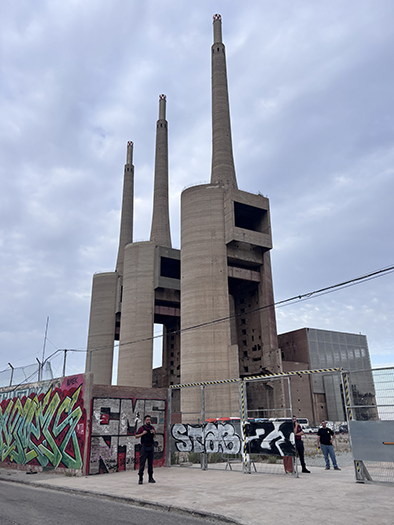
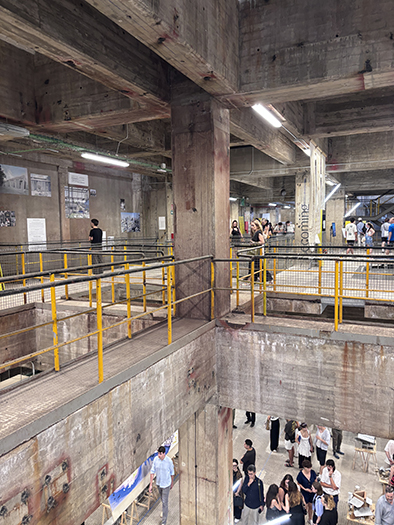
During the UIA Congress, the venue hosted an exhibition, performances, talks and even a party on the closing night. The exhibition displayed the outcome of workshops and research projects. Many of these addressed issues such as the housing crisis and urban resilience solutions, ranging from studies on 24-hour cities and nature based solutions to mitigate the effects of rising sea levels.
Barcelona International Convention Centre (CCIB)
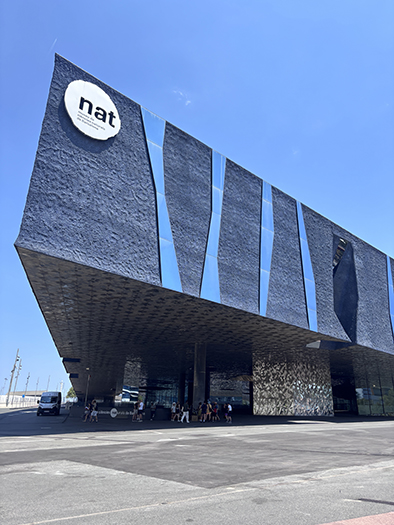
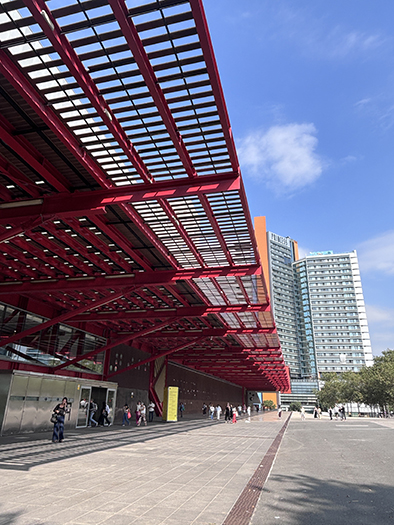
The CCIB is situated in the Forum district, opposite to a building designed by Herzog & de Meuron for the 2004 Universal Forum of Cultures and which is now the Natural History Museum. Over three intense days, the CCIB hosted a series of talks.
Monday, 29th of June
The first day began with a roundtable with Dirk Sijmons + KK + N + S, Eva Franch + Takk, Design Earth, Simulaa, mediated by Mark Wigley and Bas Smets. Given the layout of the space, with the stage in the centre and the audience surrounding it, they created a metaphor with a boxing ring. At the end of each discussion, the moderators would walk round carrying a number, as if counting down to the start of the conference. The discussions addressed the importance of architects taking both humans and non-humans into account in their designs. Designs must follow an ecological principle, and we must look to nature in the search for solutions and inspiration. We have much to learn from lichens and bacteria. We should not think in terms of reconstruction, but in terms of repair, so as not to repeat mistakes and follow the same construction model.
Next, I watched the panel discussion “Ecologies in Process. Between Land and Water”, which followed the same theme. Dirk Sijmons spoke about rising sea levels and how the Netherlands, a country criss-crossed by dykes and canals, can adapt to this rise. The solution may rely on a natural sedimentation process, achieved by creating strategic openings in the dykes and partially flooding coastal areas. He was joined by Kate Orff, from Scapestudio, who has already carried out many biodiversity regeneration projects using natural species, such as ‘Oyster-tecture’ in New York.
Tuesday, 30th of June
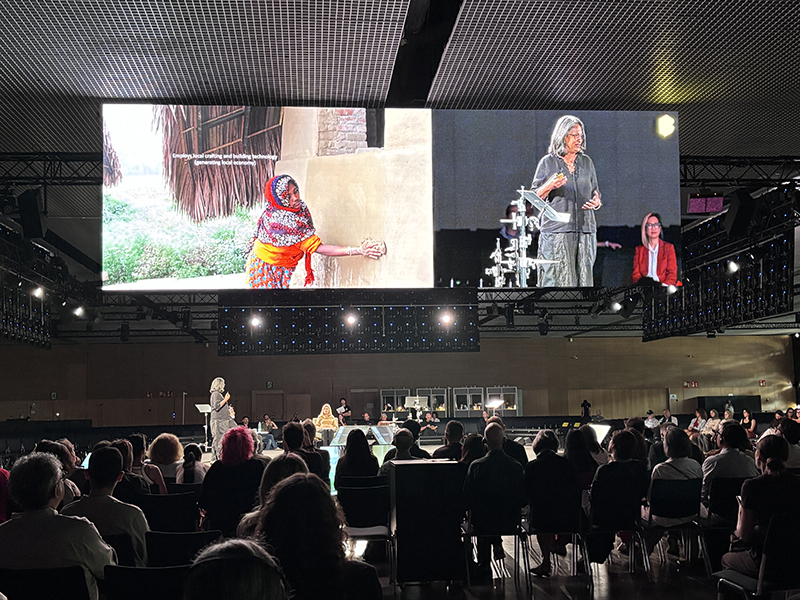
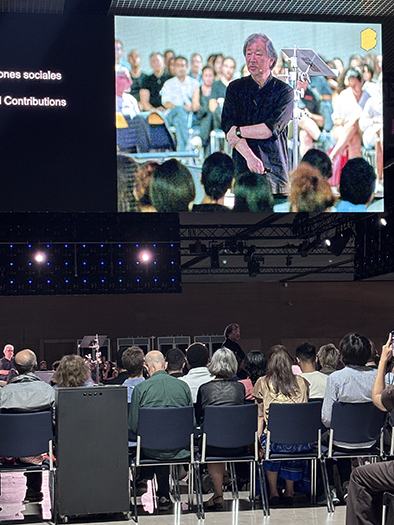
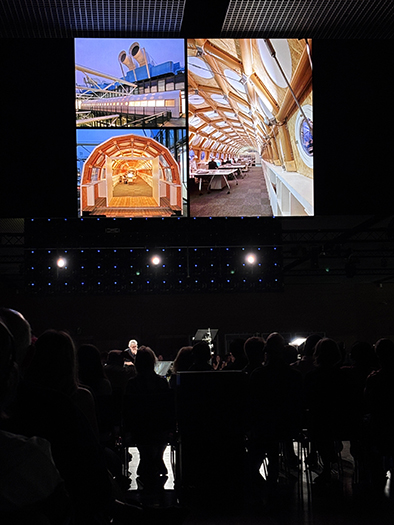
On the second day, the main theme was emergency architecture. Still in response to the climate crisis, Marina Tabassaum spoke about her project for mobile homes, a solution for the seasons of severe storms in Bangladesh. The two-storey house allows families to move up to the upper floor when flooding occurs. Next, the Japanese architect Shigeru Ban spoke about his projects to house disaster refugees, the reuse of materials and his research on paper tubes.
Wednesday, 1st of July
On the final day of the talks, discussions centred on ideals and politics stood out. Architectural projects do not need to be built to have an impact, spark a debate or bring about a paradigm shift. I attended a round-table discussion with Paulo Tavares and Marina Otero, followed by a conversation with Pritzker Prize-winning architect Smiljan Radic.
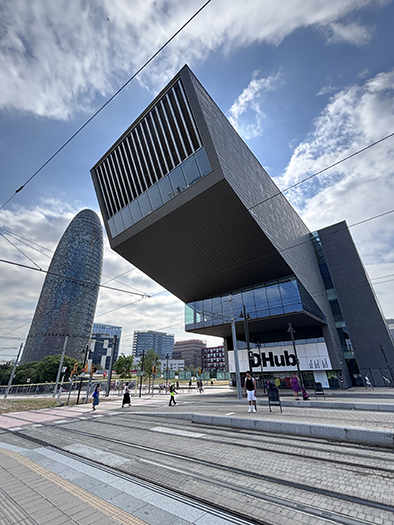
Disseny HUB
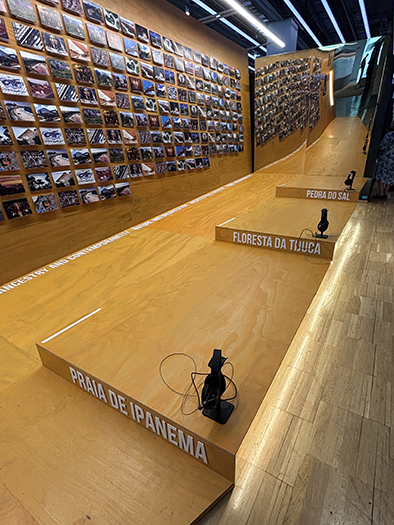
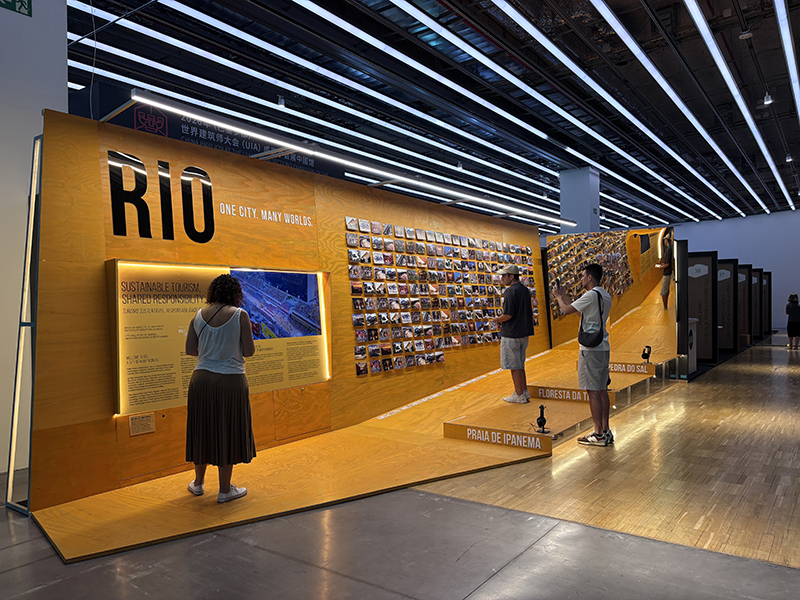
A few kilometres from the CCIB, there was also an exhibition section of the congress at the Design Museum – the Disseny Hub. Institutes from different countries set up stands, showcasing examples of architectural and construction practice in their respective nations. Invited by the Brazilian Institute of Architects (IAB-RJ) Estudio Chão designed Rio de Janeiro’s stand named “One City, Many Worlds”. Rio was a candidate to host the UIA Forum in 2028. As such, the stand featured a mural with postcards, designed by Ana Soter, and a TV screen showing beautiful images of the city. In addition, the artist Léo Chermont contributed with a sound installation from three unique locations in the city: Ipanema Beach, the Tijuca Forest and Pedra do Sal. On Sunday, 5 July, it was confirmed that Rio will indeed host the UIA Forum in 2028.
Barcelona and Enric Miralles
As well as the lectures, exhibitions and events, the UIA Congress organised tours of the city. As my PhD research focuses on Olympic legacies, I chose to visit some of Barcelona’s Olympic neighbourhoods, such as El Clot and Poblenou. In El Clot, there is an archery training centre, designed by Miralles + Pinós, which remains in use to this day.
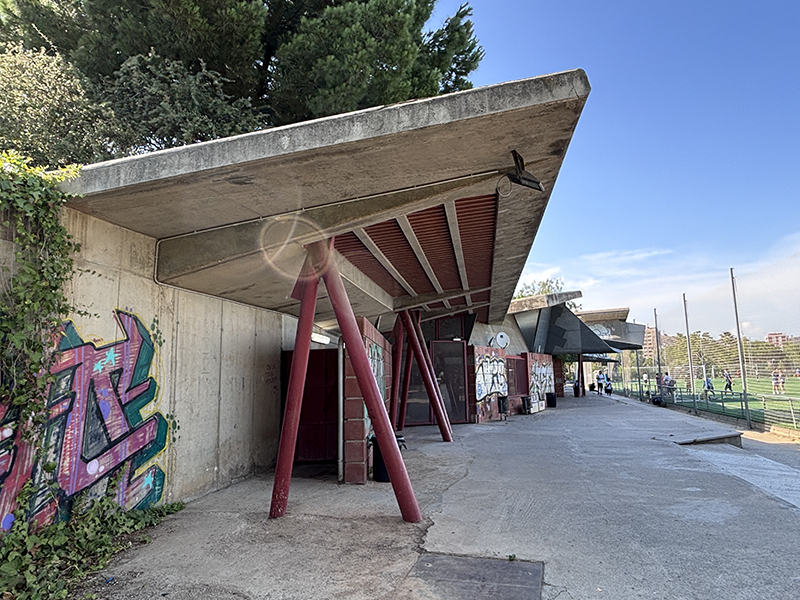
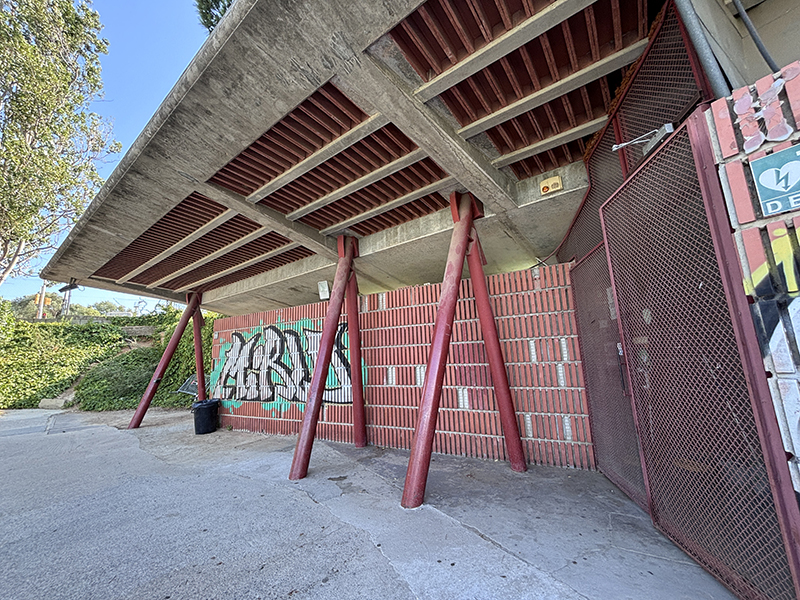
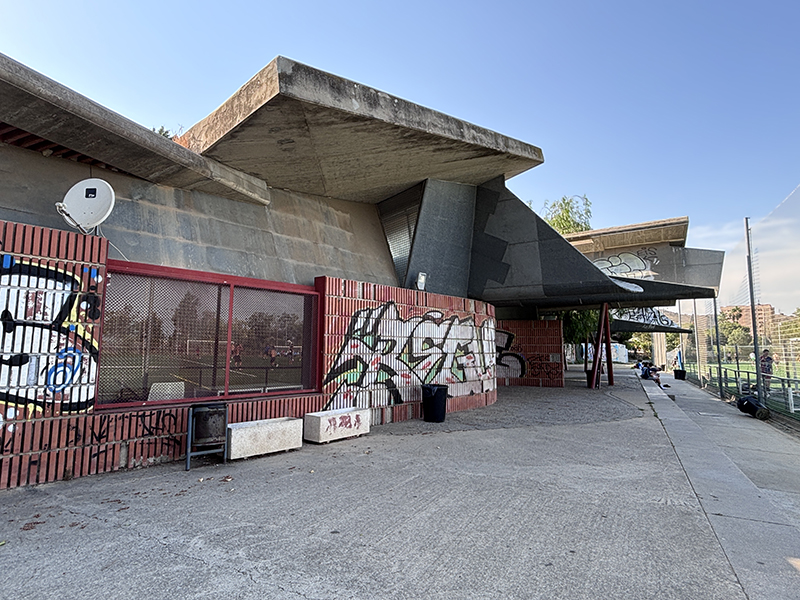
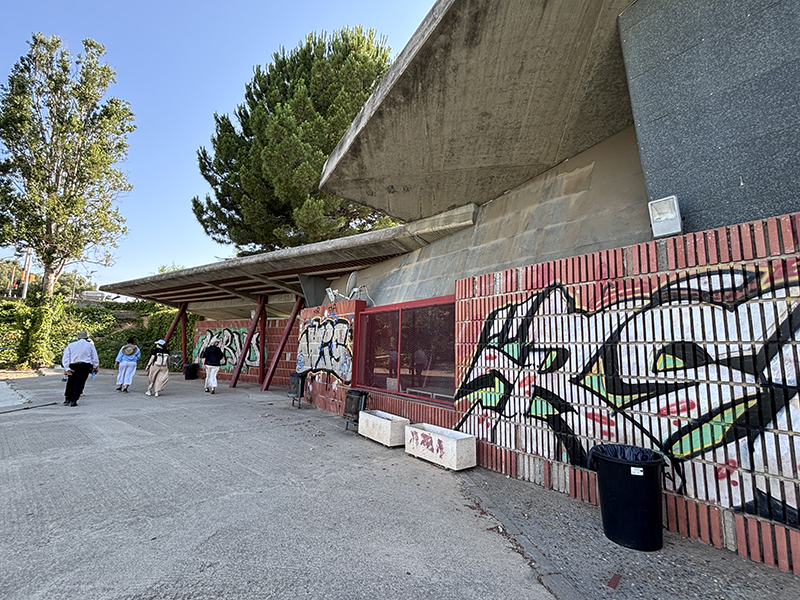
On a second tour, we cycled past a number of public spaces. These included the Parc Diagonal del Mar, designed by Enric Miralles and Benedetta Tagliabue, and the pergola on Avenida Icaria, designed by Miralles + Pinós, You may read more about it here.
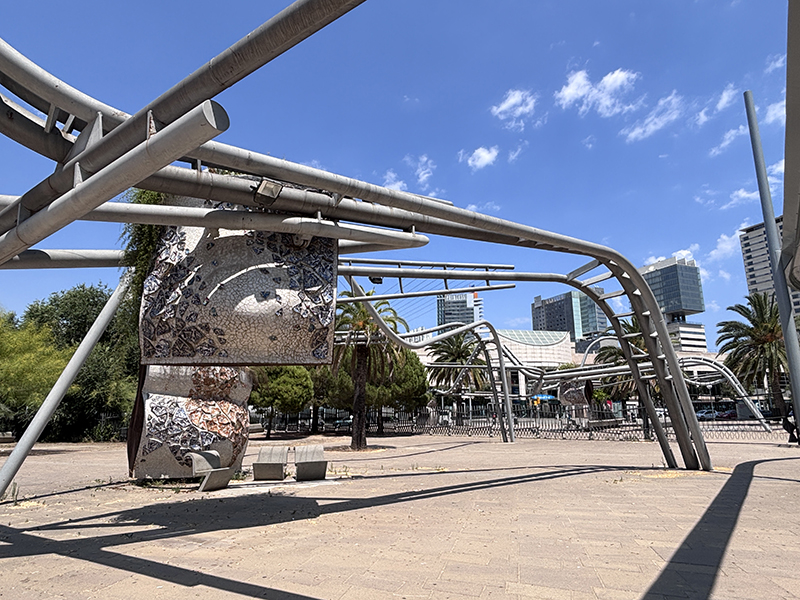
Barcelona and Antoní Gaudí
In the year of the UIA Congress, the host city is named the world capital of architecture. Consequently, throughout 2026, a number of architecture-related events were held in the Catalan capital. Among them were the celebrations marking the centenary of the death of the architect Antoni Gaudí. The tribute included the inauguration of the tallest tower of the Sagrada Família Basilica, with a mass celebrated by Pope Leo XIV.
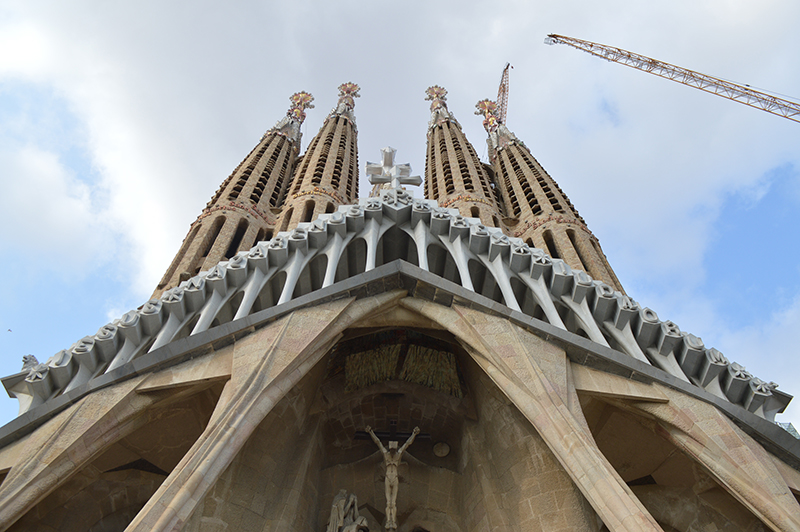
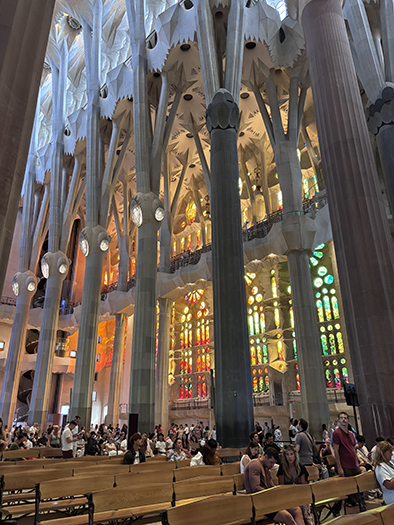
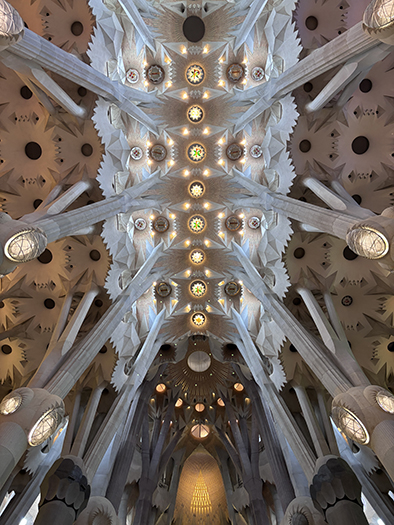
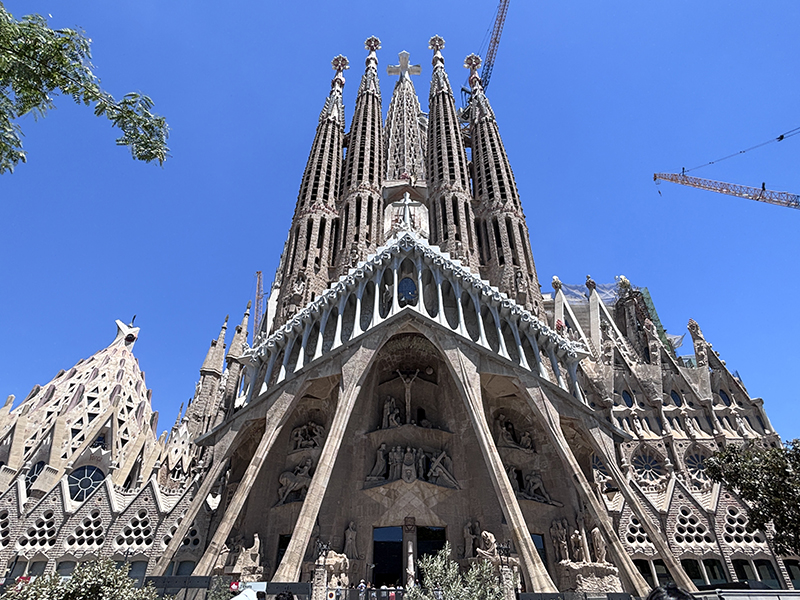
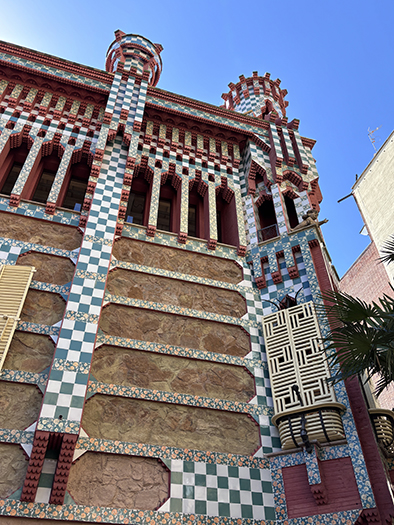
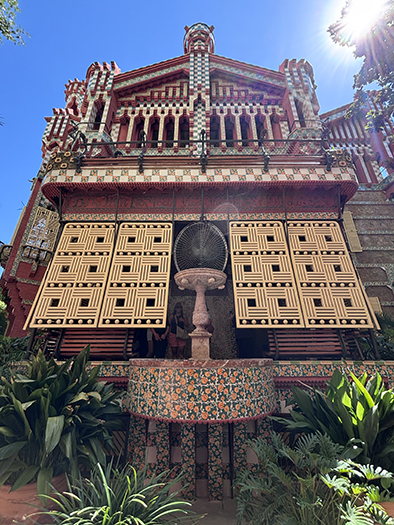
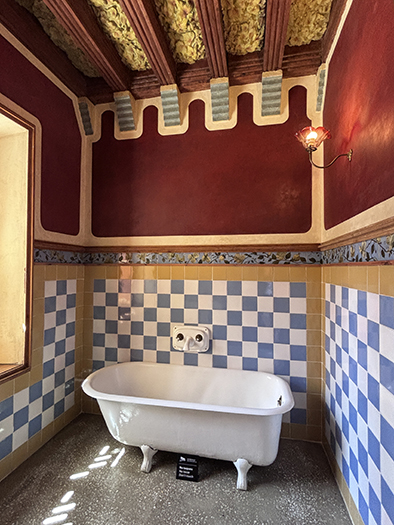
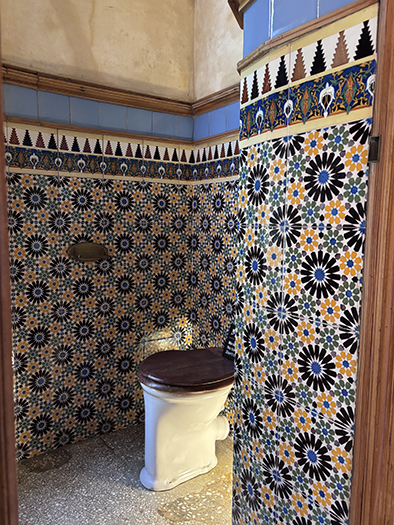
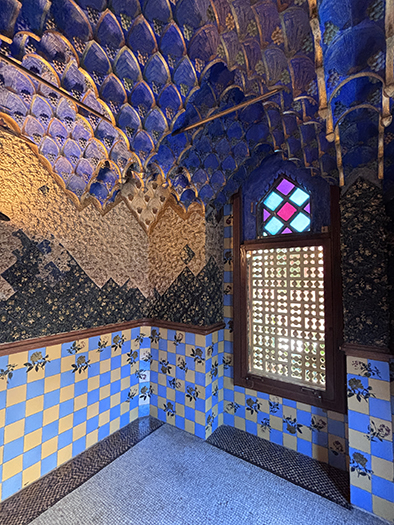
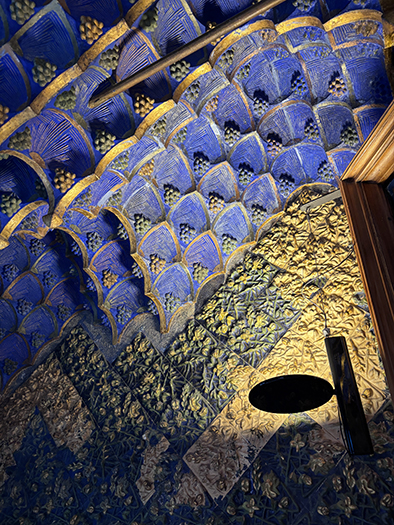
I took the opportunity during my stay to visit the Vicens House, the first house designed and built by Gaudí, between 1883 and 1885. The banker Manel Vicens and his wife lived there. In 2005, the house was designated a UNESCO World Heritage Site, and its restoration was completed in 2017.
The previous edition of the conference had been held in Copenhagen in 2023. I had the chance to visit and wrote about it here. The next edition, which will take place in 2029, will be held in Beijing.
Sources:
Catalana News, accessed 6 July, 2026.
“Neighbors Save Les Tres Xemeneies”, accessed 6 July, 2026.