In recent decades, Naoshima, Teshima and Inujima have become internationally renowned art hubs. Art lovers from all over the world come to visit the Japanese islands, which are home to works by artists such as James Turrell and Yayoi Kusama, as well as amazing architectural projects by Tadao Ando and Ryue Nishizawa, from SANAA.
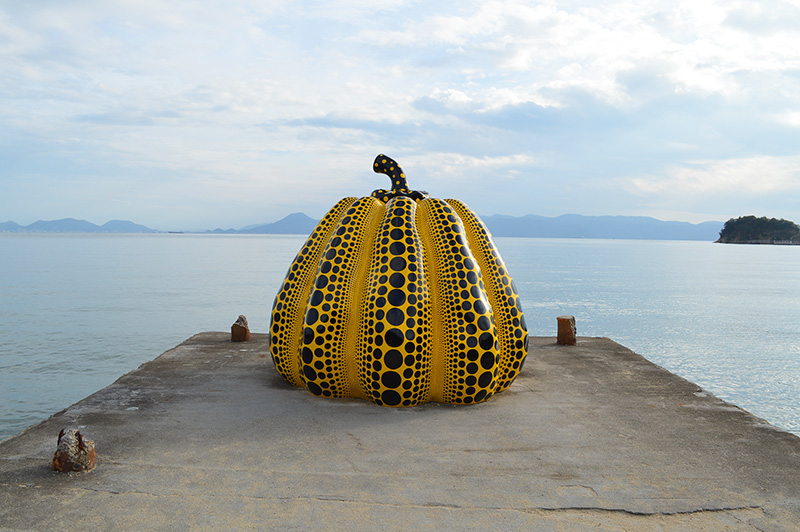
The most well-known island is Naoshima. Although it is home to the majority of the museums, Naoshima’s main industry is actually a Mitsubishi factory. A large proportion of the 3,000 residents work for the company.
You can choose to stay in Naoshima or to take a boat there to spend the day, which was what we did. We tried to find accommodation on the island, but these book up several months in advance. In the end, we stayed in the town of Uno.
The idea of transforming Naoshima into an arts centre emerged in the 1980s. The Benesse House Museum, opened in 1992, was the first museum of the complex. It was designed by Tadao Ando.
Benesse House Museum, Tadao Ando

This museum is set at the southern tip of the island, surrounded by the sea on three sides. Given this context, the architect sought to create a semi-underground building, integrated into the slope and the natural surroundings. An object that is almost invisible within the landscape. His intention was to blur the boundary between interior and exterior.

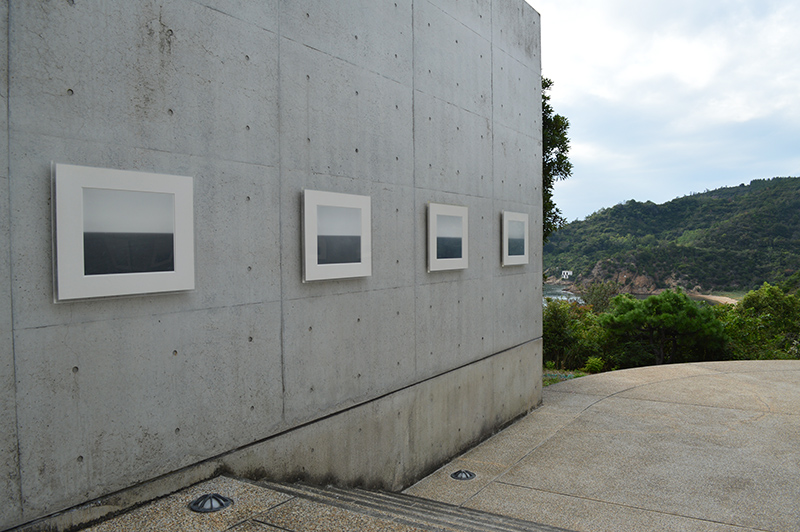
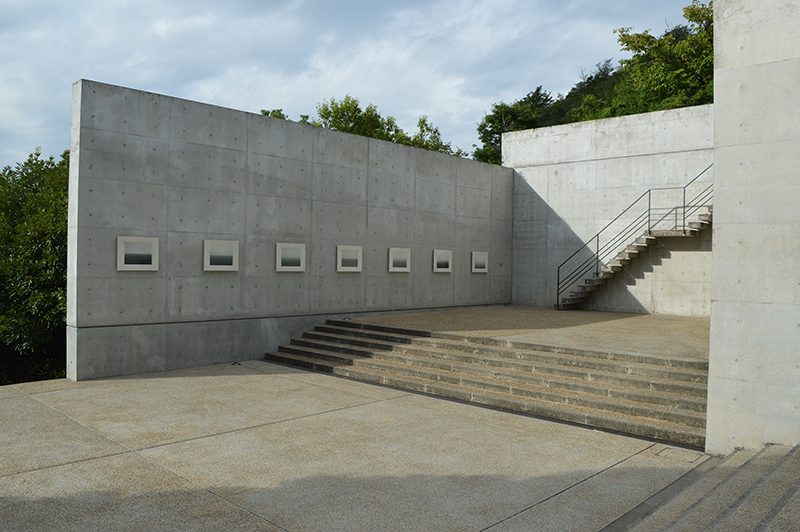
The exhibition spaces are arranged around a central circular gallery with a high ceiling. The architecture combines pure forms and straight lines with Ando’s characteristic exposed concrete walls. The art collection includes pieces by artists such as Richard Long, John Chamberlain and Frank Stella.
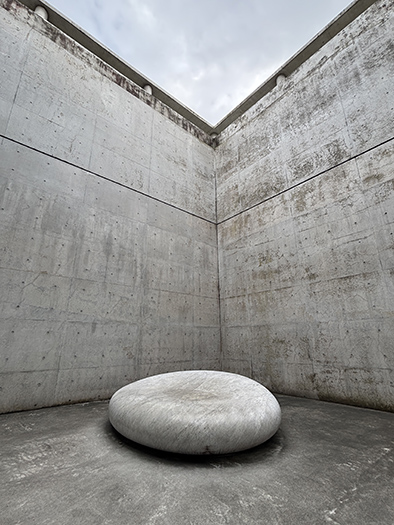
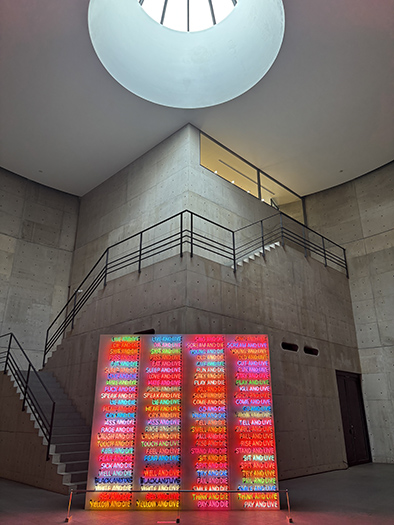
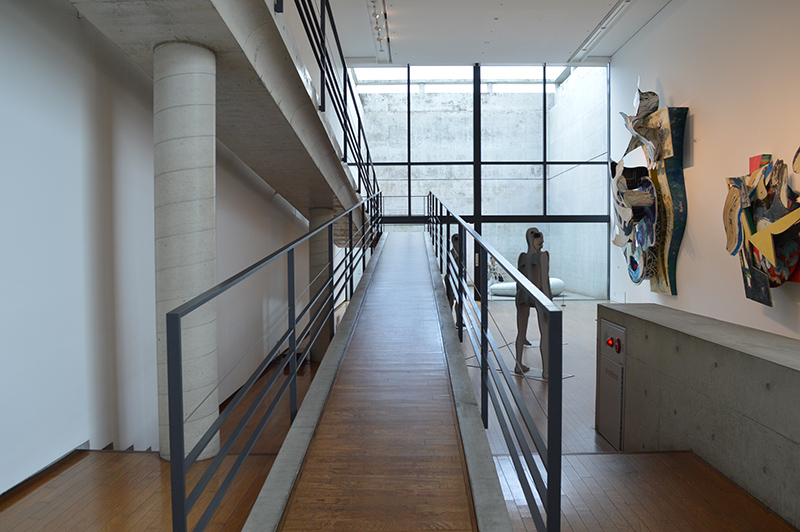
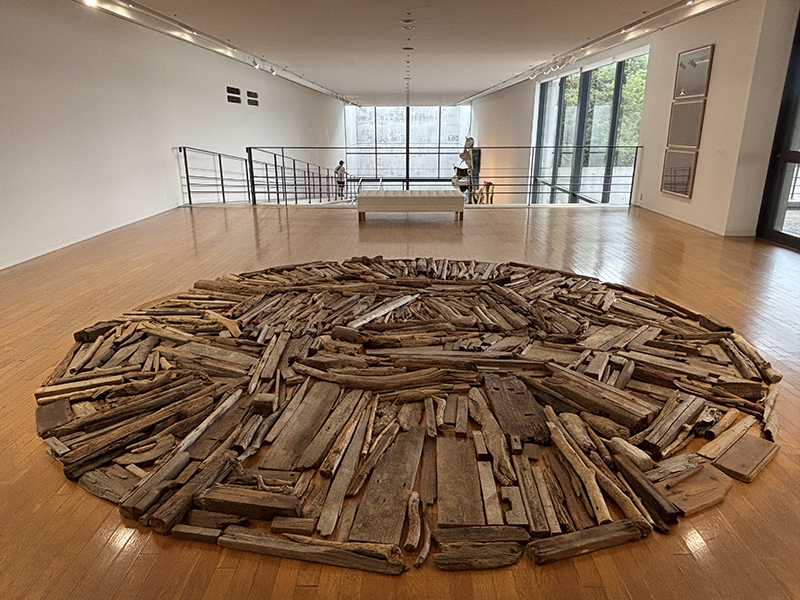
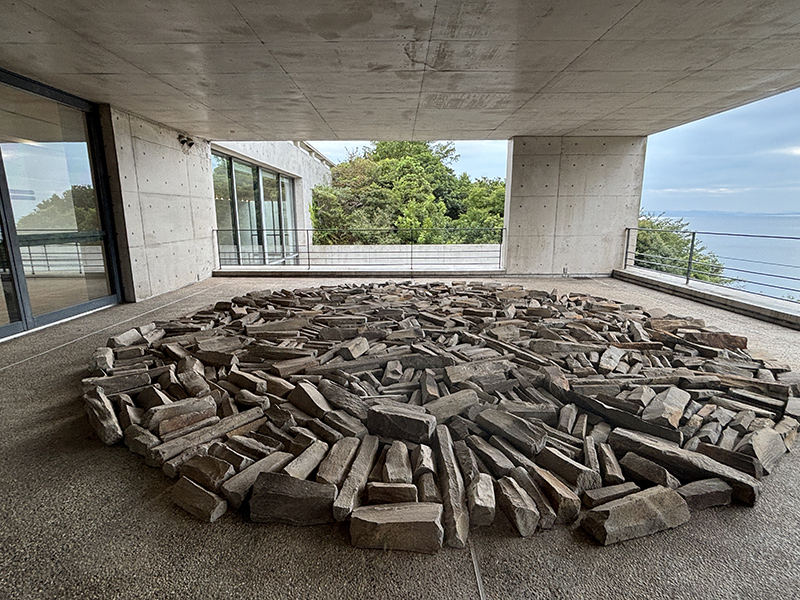
“Art House Project”
In 1998, the “Art House Project” was launched, in which artists transform the interiors of traditional houses that are in need of repair. The aim of this project was to attract visitors and raise funds for the restoration of these houses. The first one was the “Kadoya Art House Project” by the artist Miyajima Tatsuo. As it was the first intervention of its kind, he faced some resistance from the locals. To overcome this, the artist invited people to participate in the artistic process. Today, there are six other “Art House Projects” scattered across the island.
Chichu Museum, Tadao Ando
In 2004, the Chichu Museum opened. Situated on a hill 600 metres west of the Benesse House Museum, the Chichu Museum followed the same principle of integrating art with nature. The architect chose to bury almost the entire museum. The museum was designed to house permanent works by three artists: Claude Monet, Walter de Maria and James Turrell. According to our guide, the collector was passionate about Monet’s water lily paintings and, when he had the opportunity to purchase them, he decided to build an entire museum to house them and show them to the public.
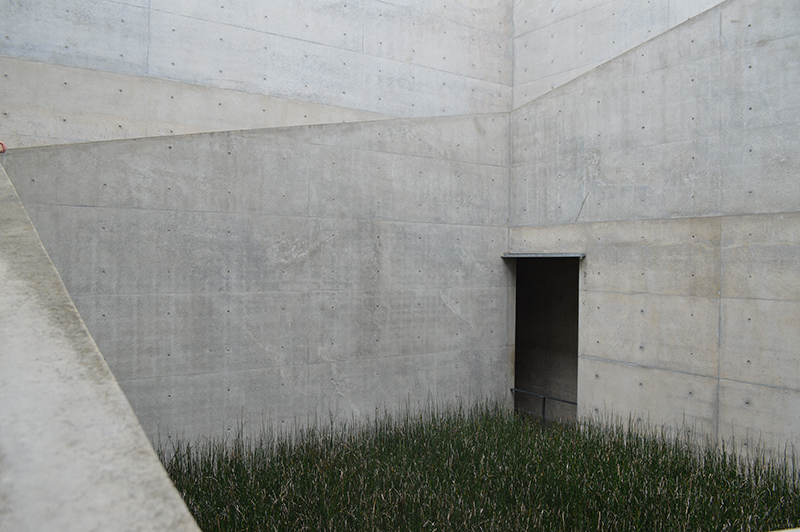
The museum itself is a masterpiece. The path from one room to the next leads us back outside, where we can gaze up at the sky alongside the geometric forms and raw concrete of Ando’s architecture.
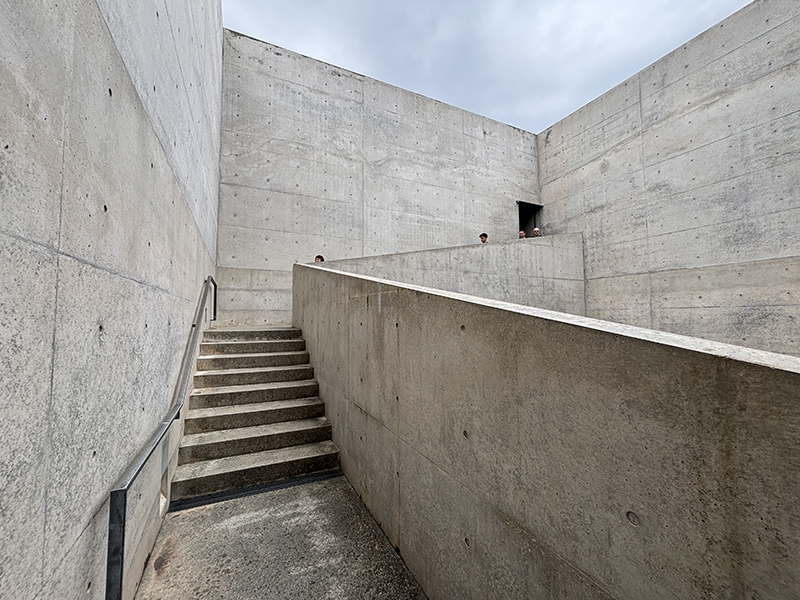
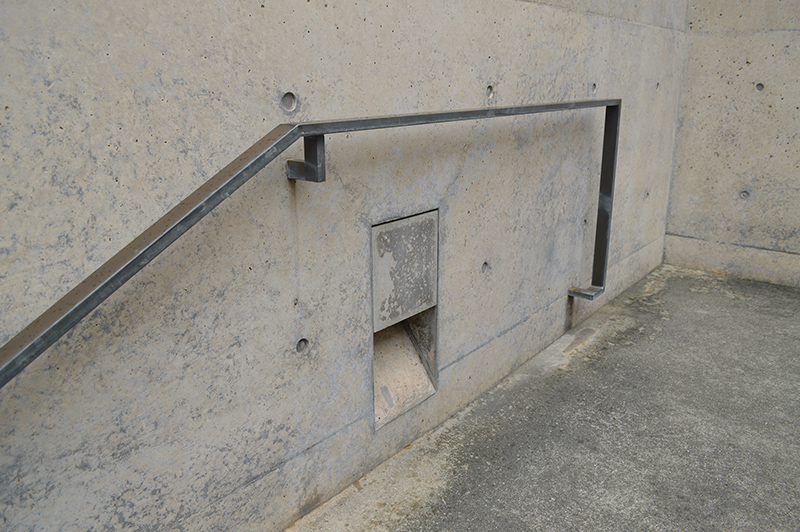
Valley gallery, Tadao Ando
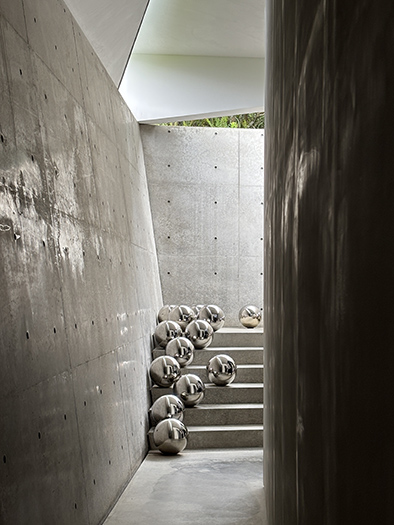
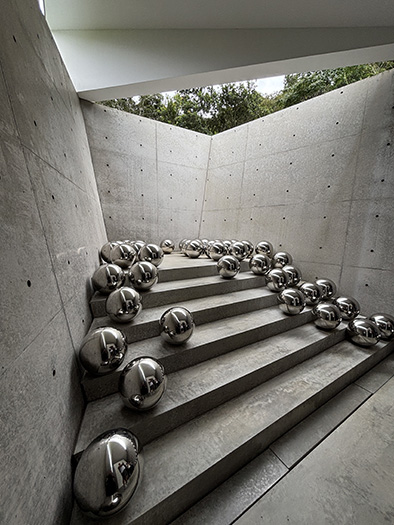
Another Tadao Ando project. This small pavilion with slanted walls is home to Yayoi Kusama’s “Narcissus Garden“.
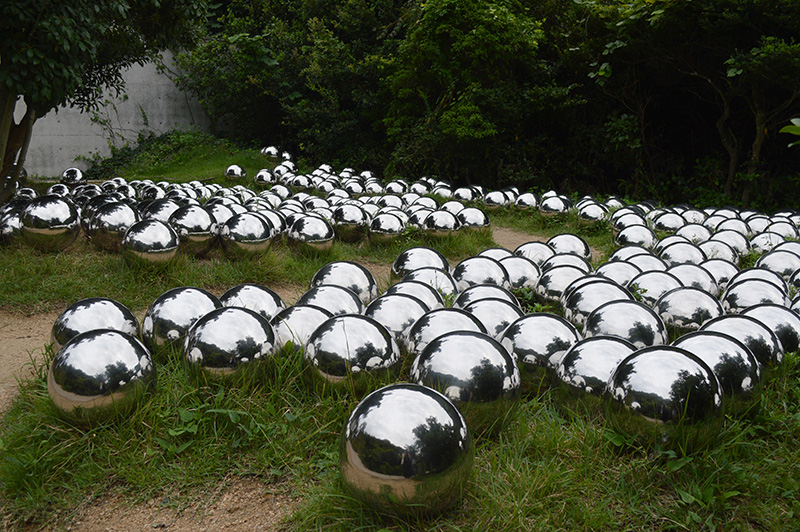
Lee ufan museum, Tadao Ando
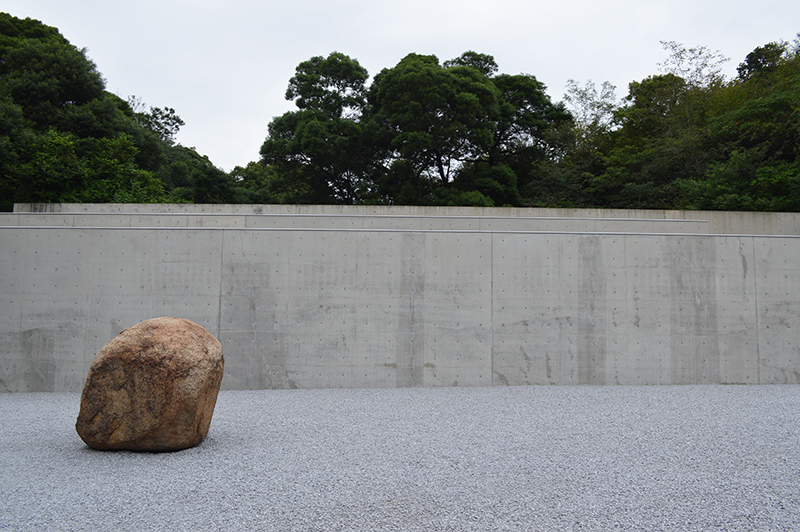
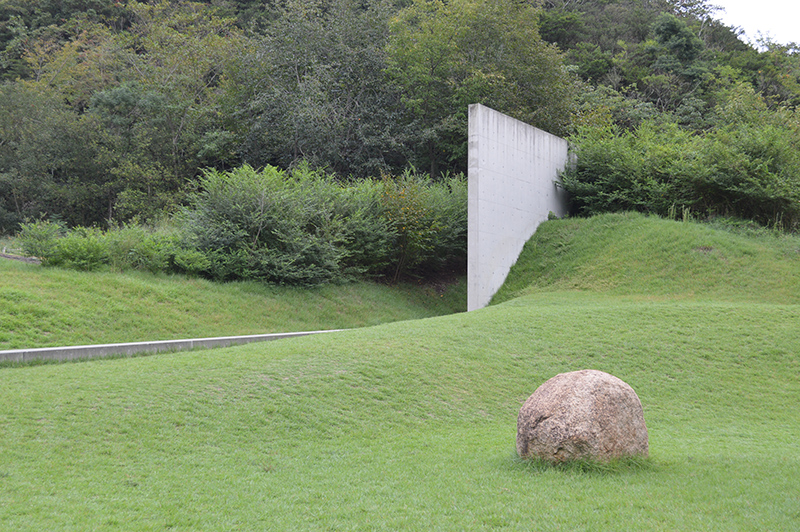
Lee Ufan is a South Korean artist who lives and works between France and Japan. He is a friend of Tadao Ando, so they designed the gallery together. The spaces were conceived specifically for the works on display and it was opened in 2010.
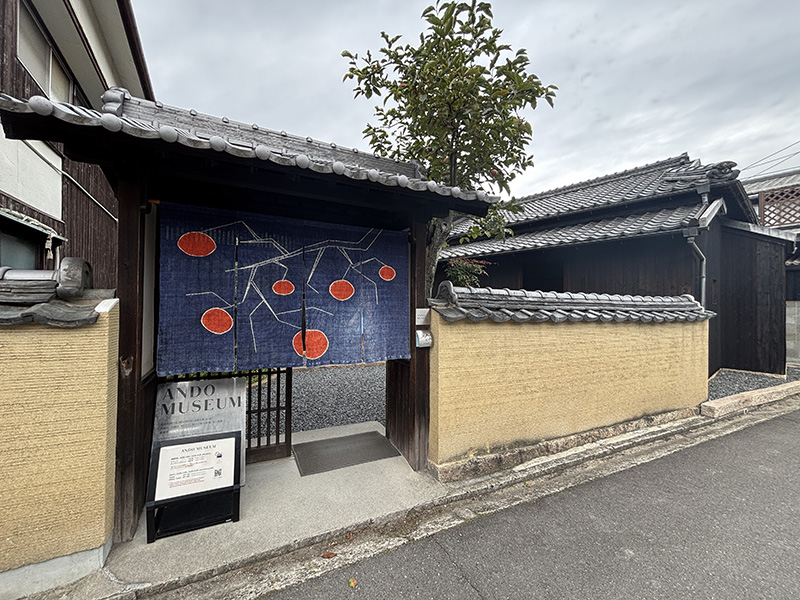
Ando Museum, Tadao Ando
Since Tadao Ando designed many of the buildings on the island, the Ando Museum was inaugurated in 2013. It is a small museum which shows drawings and models of some the architect’s iconic projects, such as the ‘Church of Light’. The exhibition includes sketches and information about the other museums throughout the island, so I consider this a good starting point for one’s visit.
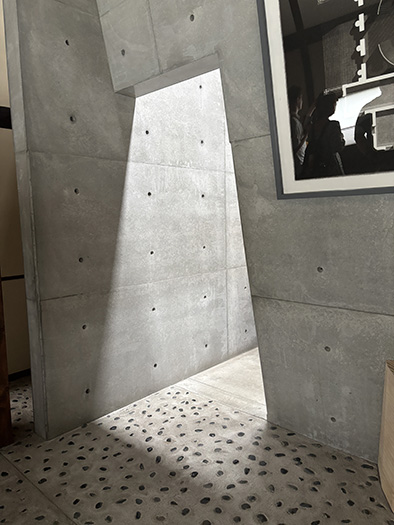
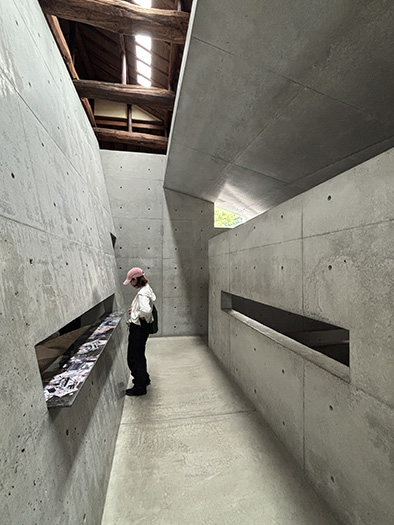
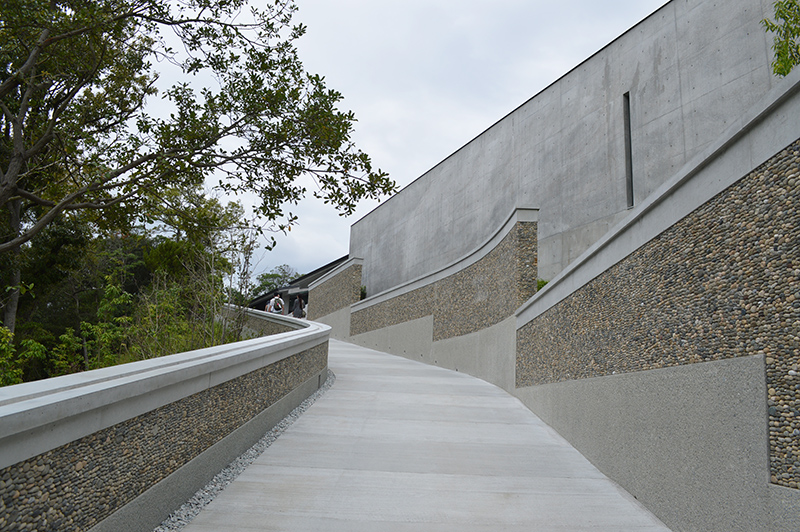
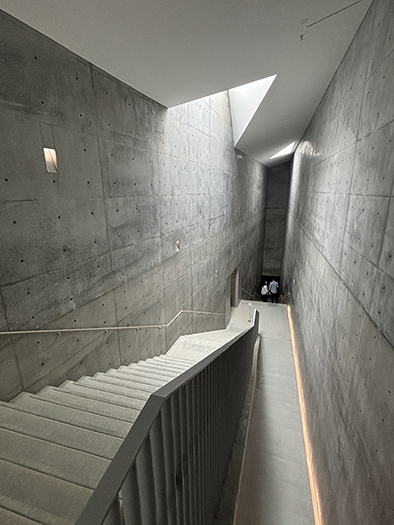
Naoshima new museum of art, Tadao Ando
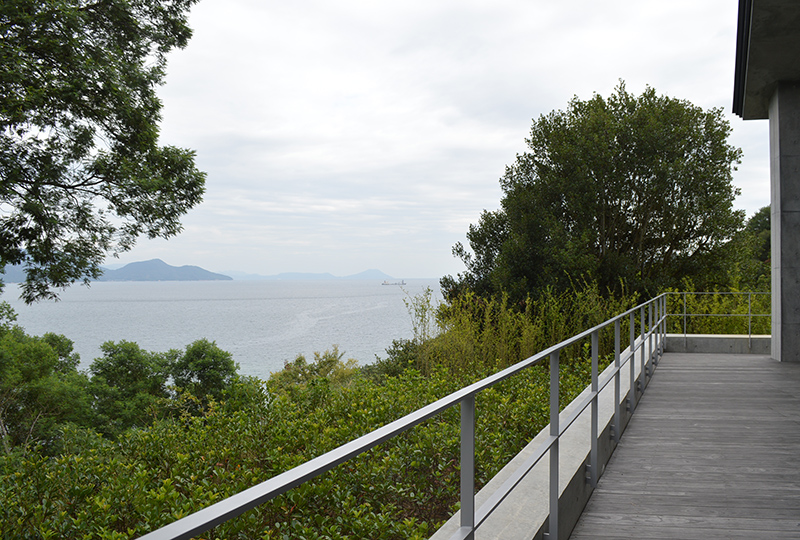
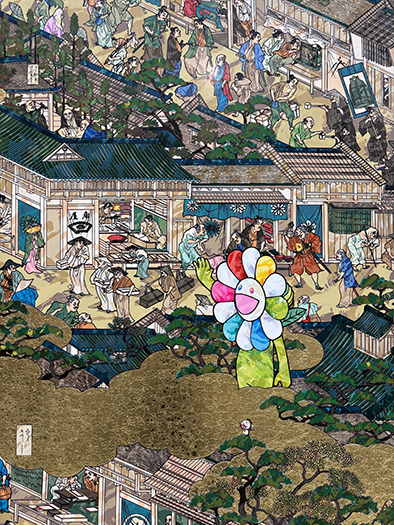
This is the newest museum in the Island. It opened in May 2025. As well as a restaurant with panoramic views, the museum houses a permanent collection featuring exclusively Asian artists.
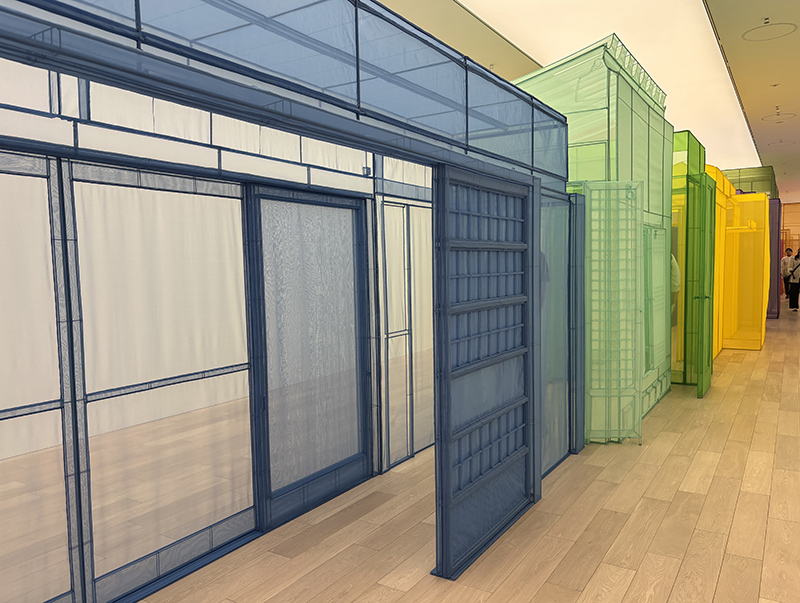
Teshima
Teshima is larger than Naoshima in terms of land area, but has fewer residents and museums. Our guide told us that Mitsubishi factory had considered setting up here before, but the residents were so resistant to the idea that it ended up going to Naoshima. As a result, Teshima has a calmer lifestyle and a greater natural environment, which includes many rice fields. The main artistic attraction here is the Teshima Art Museum.
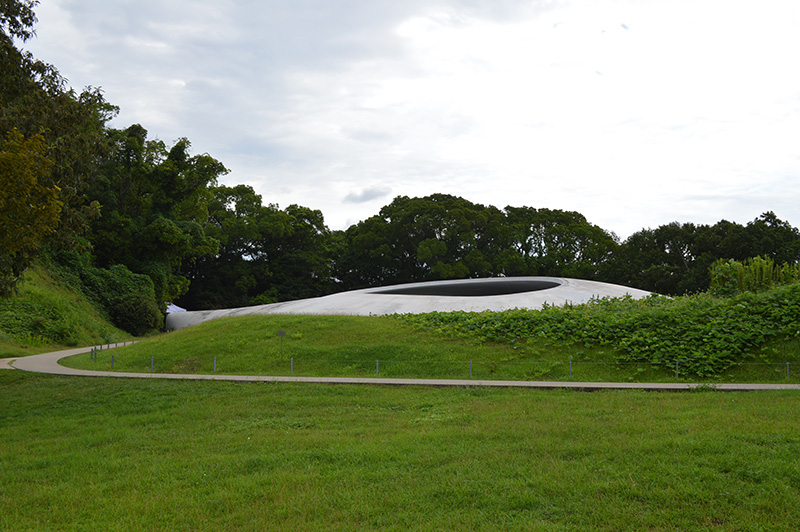
The Teshima Art Museum was a collaboration between architect Ryue Nishizawa and artist Rei Neito. The museum opened in 2010, same year of the first edition of the Setouchi Triennale. Photography is not allowed inside, so I only took external pictures. It is a space for contemplating art, architecture and nature.
It is interesting to observe how people behave in the space. As the use of smartphones is prohibited, people really do take the time to connect with the place. Some people walk around, some sit down, others lie down (and even take a nap). Some choose a spot to meditate, others move around to appreciate different perspectives. You can stay as long as you want, so some people stay for just a few minutes whilst others remain for hours.

The organic shape is the result of a construction process that involved creating a mound of earth, which was then completely excavated once the concrete had set. Here is a video showing this impressive process:
The French artist Christian Boltanski also created two installations on Teshima island. The first of them is the “forêt de murmurs” (translation: forest of whispers). This work emerged from an interactive workshop with local residents, held during the Setouchi Triennale in 2016, and eventually became a permanent installation. In the forest, bells were hung on branches. These are tangled with acetate, on which visitors are invited to write the names of their loved ones.
Boltanski’s second work is “Les Archives du Cœur” (translation: Archive of the Heart). It is a small centre where people can go and record their heartbeats. The recordings are added to a catalogue that can be accessed by the visitors. There is also a room where we can hear the heartbeats of various people who have left their recordings in the past. The artist’s works deal with themes such as memory and resistance to forgetting.
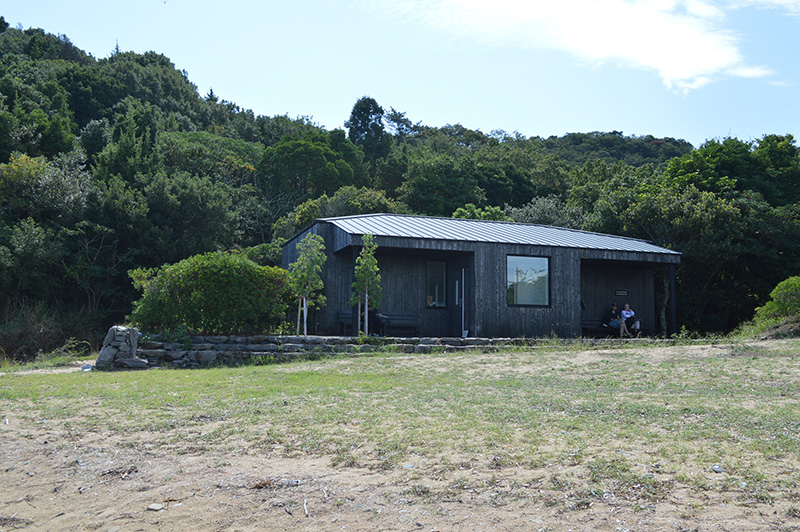
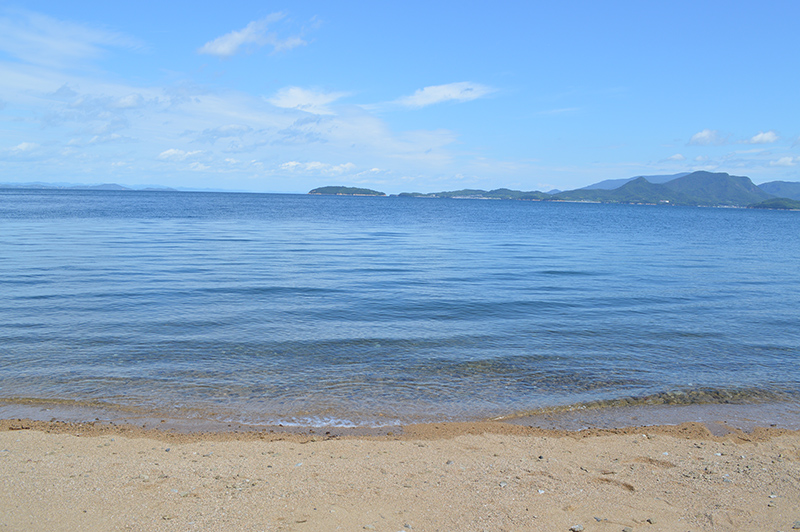
“Les archives du coeur” was built in a very beautiful part of the island, next to the beach. The artist chose this site thinking of it as the final destination of a pilgrimage. People from all over the world can come here to hear the heartbeat of a loved one and take in the beautiful landscape.
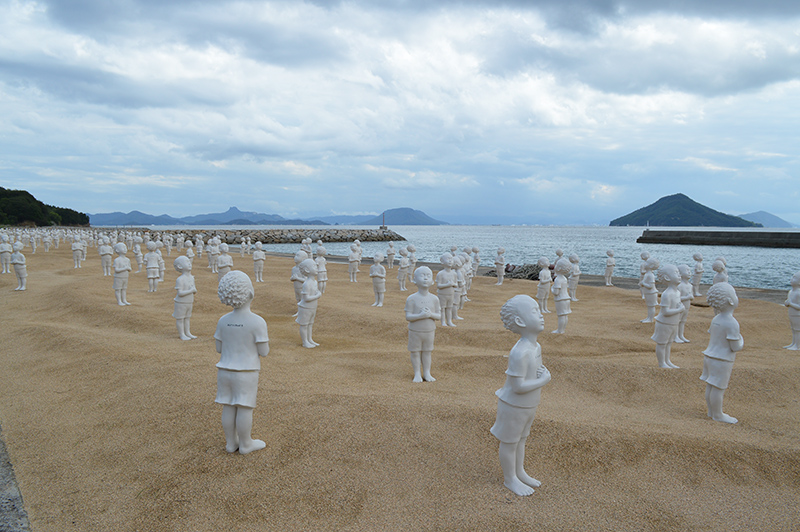
I visited the islands just before the start of the 2025 Setouchi Triennale. Even so, I was able to see one of the artworks that had already been installed. It was called ‘Beyond the Border – Prayer’, by the Taiwanese artist Lin Shuen Long. The work featured sculptures of 197 children, each with the latitude of a country’s capital printed on their backs. They were facing their respective countries, in a prayer pose. A gesture representing the next generation praying for the future of their countries and the whole planet.
We only had two days in the region, so we didn’t have time to visit Inujima Island, where there is an installation by Beatriz Milhazes. I’ve included a photo of the Brazilian artist’s installation below.